
Stimulated by Babamiri et al 2025.[1]
ALL – acute lymphoblastic leukaemia
IF – impact factor
AML – acute myeloblastic leukaemia
CML – chronic myeloblastic leukaemia
CLL – chronic lymphoblastic leukaemia
PSQI – Pittsburgh sleep quality index
MCID – minimum important clinical difference– key to acronyms
There are several novel aspects about the paper I am highlighting this week. We have covered sleep quality and lack thereof a number of times already (see the blog category: Sleep), but we have never addressed sleep quality in patients with ALL. This is also the first time we have seen reflexology appear in a trial of acupuncture. Finally, whilst I see a reasonable number of trials from Iran come up on my searches, I rarely, if ever, highlight them. This one seemed to make the cut, at least at first.
The journal Explore has appeared before on the blog (see: Acupuncture in ICU 2024) but I do not recall looking into its background. Volume 1 dates back to 2005 and it has published bimonthly since. It focusses on ‘healing practices from a wide variety of sources, including conventional, alternative, and cross-cultural medicine’, and has an IF of 1.9.
ALL has a very good cure rate in children, but not quite so good in adults (this population). AML is worse in both groups. Outcomes in adults are a little better for the chronic leukaemias (CML or CLL) than for ALL, so you can image that the patients in this study would have had quite a lot to think about when they were waiting for sleep each night, not to mention the side effects of the intensive chemotherapy regimens to which they would have been subjected. In this trial all the patients were treated with the same chemotherapy regime and no radiotherapy. None of the patients were subject to bone marrow transplantation during the trial, which is good considering one group was having lots of acupuncture needles (10 to 15) inserted twice a day for 4 weeks (a total of 56 sessions).
SP6 is mentioned specifically, but the other points were chosen by the acupuncturists based on reported symptoms, particularly pain and anxiety. The paper reports that twice daily treatment was used ‘…based on previous research indicating that more frequent sessions can lead to significant improvements in sleep quality among patients with similar conditions.’ But this statement is not referenced, and I cannot find any data to support it.
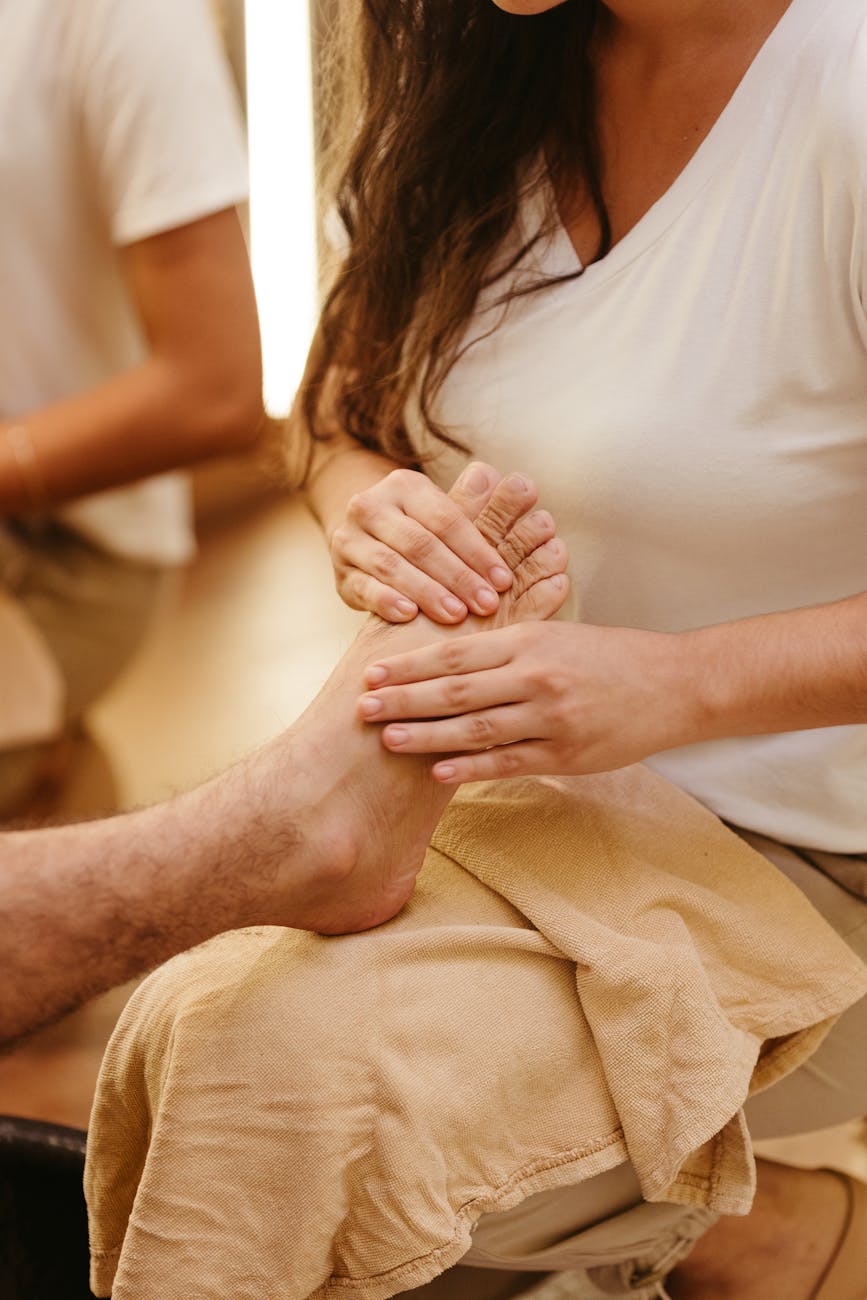
The reflexology group had one 10 to 15 minute session per day for 4 weeks using sweet almond oil. The paper seems to have quite a comprehensive description of the techniques used. The treatment environment was relaxing and soft background music was played in both groups, but it is not clear whether all features of the environment were the same.
The primary outcome, by virtue of it being the only one, was the PSQI. This outcome has featured more than several times on this blog. Try putting PSQI into the blog search box – I think the acronym has high specificity. I describe it in the blog when it first makes an appearance (see: EA for sleep from January 2021).
The baseline PSQI scores are reported in Table 2 and Figure 2 of the paper, but they are quite different in each. Approximately 30 in the table and 16 to 17 in the figure. The latter fits better with the PSQI range of 0 to 21. I have no explanation for this discrepancy, and I also found a number of serious issues with the reference list, so I have sent an email to the lead author and checked the listing of journal editors. I know quite a few of the names, so I better be careful here. I might write to the EiC if I do not get a response from the lead author, because there is quite a bit here that should not have slipped through, although I note that it took over a year from initial submission to subsequent resubmission and acceptance, so there may have been quite a lot to sort out.
Anyway, if the data is to be believed, reflexology and acupuncture both improve sleep quality to a clinically significant degree. The improvement is around 5 points on the PSQI (from Figure 2 of the paper) and the MCID on the PSQI is 3 points.
There is no discussion of AEs and considering the medical vulnerability of the patients (particularly to skin penetration), this is a notable oversight.
Since the authors expected acupuncture to be better than reflexology, I am prepared to believe these results that show no difference between the interventions (in terms of outcomes). However, an hour a day of needling with a total of 20 to 30 needles (in two sessions) does not compare favourably with 10 to 15 minutes per day of reflexology in a number of ways, including risk, cost, and practicalities.
The bottom line is that I would be buying the reflexology for improving sleep in adults undergoing chemotherapy for ALL, if I was completely happy with the provenance and accuracy of the data reported.
References
1 Babamiri B, Pourbahram R, Sayahi M, et al. Effects of acupuncture and foot reflexology on sleep quality in patients with acute lymphoblastic leukemia: A clinical trial. Explore N Y N. 2024;21:103101. doi: 10.1016/j.explore.2024.103101
 The BMAS Blog
You must be logged in to post a comment.