

Stimulated by Wang Z et al and Wang Y et al 2026.[1,2]
GBD – global burden of disease
IF – impact factor
NVU – neurovascular unit
SDI – sociodemographic index
BBB – blood brain barrier– key to acronyms
These papers both appeared on my PubMed searches at the same time in the last week of August. One is an epidemiological paper on migraine based on GBD 2021 data and published in the journal Pain Research and Management (IF 3.1) and the other is a narrative review of acupuncture mechanisms focussed on the NVU in migraine and published in the European Journal of Neurology (IF 4.3).
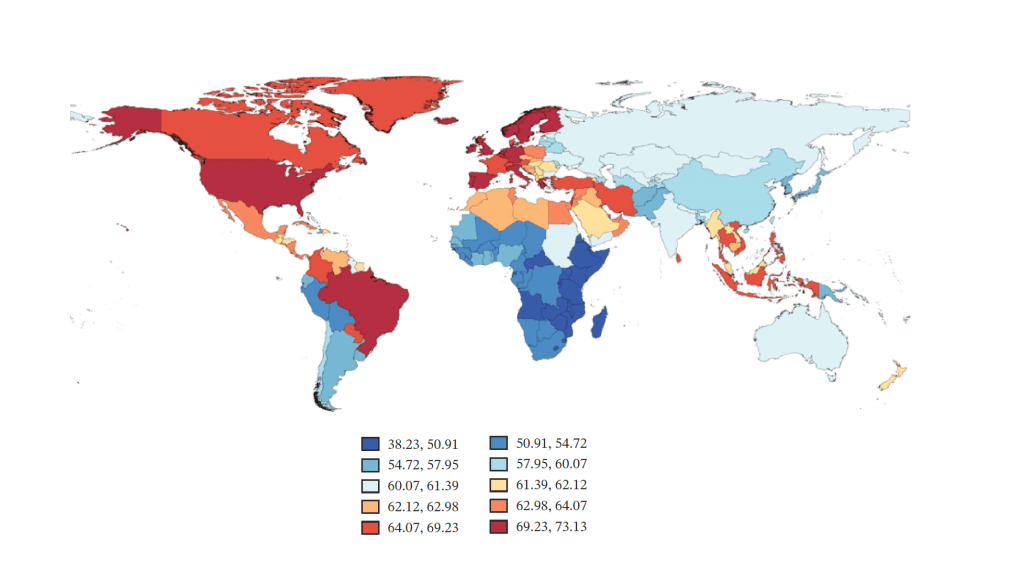
The first paper alarmed me by reporting that my lifetime risk of developing migraine was 51.53% based on GBD data from 2021.[1] When drilling down into the subgroups I was reassured to find my risk reduced to 41.99% by being male (as opposed to 59.84% for the main alternative), and it reduced even more dramatically by my being an older gentleman (1.93% for men of 60). The latter is mainly related to the lack of years left to develop the condition of course. Indeed, the majority of the accumulated risk occurs before the age of 50.
The rather novel aspect to this paper is an attempt to predict the future lifetime risk of migraine by comparing data from GBD 2021 with data from 1990 and extrapolating forward. By doing this they estimate that by 2050 the lifetime risk will rise to 57.18%
The incidence of migraine seems to be higher in more developed countries (high SDI), with Western Europe at the top of the list and in particular Italy and Belgium, followed closely by Norway, Sweden and Germany. Somalia and South Sudan are at the lower end of the risk profile, but I cannot help thinking that there is rather more to worry about than migraine headache when you live in such countries. The paper acknowledges the potential for differences in diagnosis and reporting in the GBD data.
Another rather important aspect is that the GBD data does not differentiate between first ever migraine and a recurrence of migraine in someone who suffered in the past but then went into remission. There is simply a category for ‘migraine’ and another for ‘no active migraine’. This means that estimated figures lifetime risk from this data may partially overestimate the real lifetime risk.
The second Wang et al paper is a narrative review of primarily mechanistic research on acupuncture in migraine from 2000 to 2026.[2] The paper has almost 200 references, and a couple of useful summary figures. It is focussed around the NVU, which is a complex multicellular structure composed of neurons, astrocytes, vascular endothelial cells, pericytes, microglia, and the extracellular matrix.
It is an awfully hard task to try to summarise all the varied mechanistic data into a predefined structure (the NVU) without overstepping the mark from the perspective of what the individual papers actually show. The authors are acupuncture advocates, so naturally they tend to treat the evidence in a positive light, and they draw on data outside the strict sphere of migraine to support their arguments.
They suggest that acupuncture may protect or restore NVU homeostasis through 4 broad mechanisms: reduction of pathological neuronal excitability; preservation of BBB integrity; suppression of microglial neuroinflammation; improvement of oxidative stress in mitochondria and energy metabolism. They cite 12 papers to support the idea of reducing neuronal excitability although only 6 come from migraine research. Six papers cover the BBB with 4 from migraine research. Five concern microglia and 4 of these are from migraine research. Two papers deal with energy metabolism: 1 from a migraine model and the other from a chronic inflammatory model.
Having reviewed these mechanistic elements they propose a ‘comprehensive dose-effect framework’, which goes a little too far from my perspective as a clinician who treats a lot of migraine patients. The one area on which I would agree is a central role of the acupuncture point GB20.
References
1 Wang Z, Li Y, Feng S, et al. Lifetime Probability of Developing Migraine: A Novel Epidemiological Perspective Based on Global Burden of Disease Data. Pain Res Manag. 2026;2026:e9739777. doi: 10.1155/prm/9739777
2 Wang Y, Zhang C, Shen L, et al. Mechanisms of Acupuncture on the Neurovascular Unit in Migraine: A Narrative Review. Eur J Neurol. 2026;33:e70730. doi: 10.1111/ene.70730


You must be logged in to post a comment.