

Stimulated by 10 reports from March to September 2026.[1–10]
AE – adverse event
GPAC – Gram-positive anaerobic coccus
IF – impact factor
CT – computed tomography
CECT – contrast-enhanced computed tomography
MTP – metatarsophalangeal
CXR – chest X-ray– key to acronyms
I have been accumulating this sample of AE reports since March this year and have now reached 10, so I thought I better deal with them all in a single post. None of them impelled me to highlight any one of them immediately or devote an entire blog post to an individual report, but I did not want to leave them unmentioned either.
In roughly the order of publication, or appearance on PubMed, we start with the first case I can recall reading of small bowel perforation. There were 4 perforations found at laparotomy, in fact, in the small bowel of a 71-year-old man with a very large ventral hernia. The case describes prior treatment with acupuncture for intestinal obstruction, but perhaps they mean constipation. Surgical treatment was required but the hernia was not repaired at the time. This case came from China.
The second case is another first for me. It is a superficial temporal artery aneurysm in a 51-year-old man apparently caused by daily self-acupressure to the pre-auricular area. Unfortunately, we do not know why, or for how long, he had performed this acupressure. It was a dissecting aneurysm of 9mm diameter and was successfully treated by coil embolization. The case came from Japan.
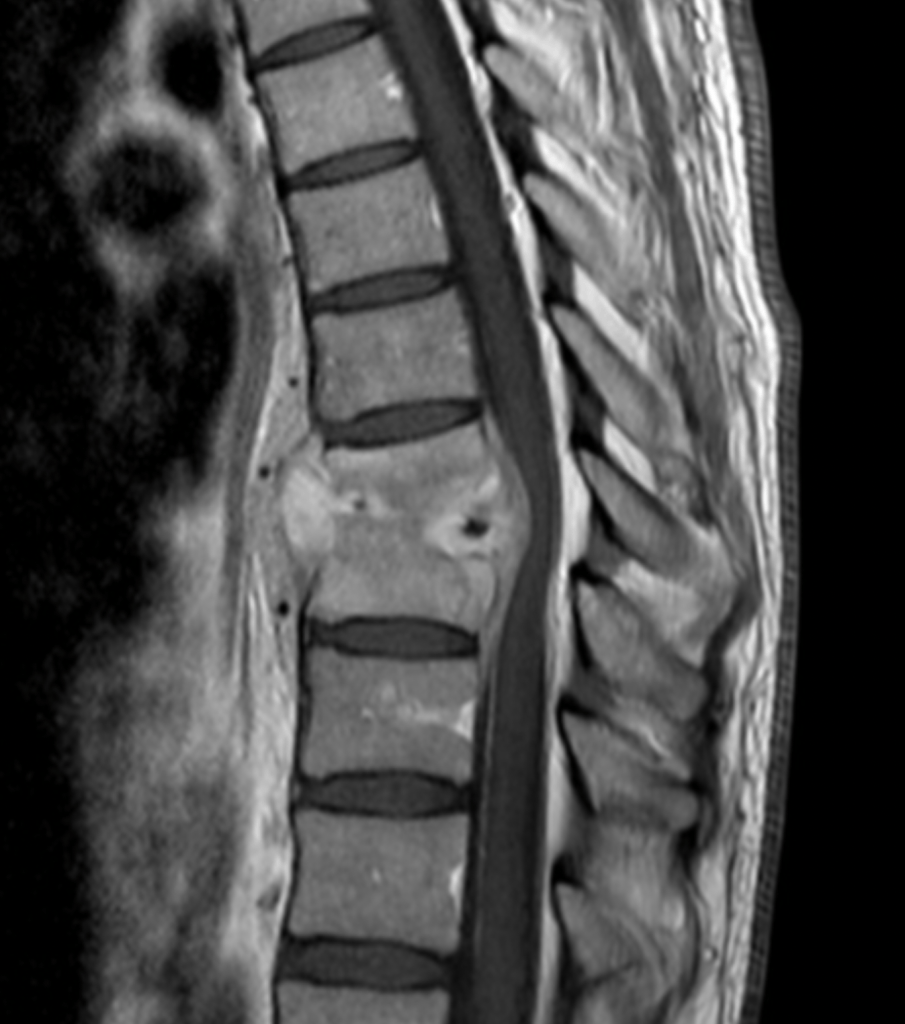
The third case on my list came from Canada and it is of a 43-year-old Caucasian man (an architect) who received acupuncture at home from a friend who was a chiropractor for his lumbar pain. He had a recent history of radiculopathy. The acupuncture was applied to the left lumbar area, and we are told that the skin was cleaned with alcohol prior to insertion of sterile needles. About a week later he developed a new mid-thoracic progressively worsening pain with radiation bilaterally around the ribcage. This turned out to be due to a Staphylococcus aureus spondylodiscitis at T7 to T8, which was treated by surgical decompression and spinal fusion.
The fourth case is from Ningbo, China and involved a 58-year-old man with persistent LBP who had received a lot of acupuncture treatment. We have highlighted research from Ningbo previously, see SAH headache 2019. This is another case of spinal infection attributed to acupuncture. It is somewhat less extensive than the previous one and the infection was caused by the skin commensal Finegoldia magna, which is a GPAC and opportunistic pathogen. It was identified by genetic analysis of disc material from the offending LDH obtained during surgical debridement.
So, now we have seen thoracic and lumbar infections, the fifth case is of cervical spondylodiscitis, and it comes from Chengdu, China. This time it involved a 65-year-old woman with persistent neck pain who had received multiple sessions of acupuncture with “penetration frequently extending to the spinal bony surface”. Well, the latter is not at all uncommon of course. The responsible bug on this occasion was Kocuria varians, a Gram-positive, catalase-positive, coagulase-negative coccus, which is also a skin commensal and opportunistic pathogen. Whilst the bug was eventually grown from blood cultures and the systemic signs of infection had receded, the patient eventually underwent surgery due to the development of signs of spinal cord compression. She underwent surgical debridement, drainage of the epidural abscess, and anterior cervical fusion of C4 to C5.
Case number six is rather curious. It is another case from Japan and is reported in brief in the Scandinavian Journal of Rheumatology (IF 1.5). A 43-year-old woman presented with high-grade fever and a 1-day history of painful swallowing. She had been treated 2 weeks prior to presentation for shoulder stiffness during which a 15cm needle had been inserted in her right upper back medial to the scapula in the vicinity of the 3rd right rib. This had apparently been the cause of her large vessel vasculitis and mediastinitis, which was principally diagnosed by contrast-enhanced CT (CECT) imaging. There was no discussion about how this needle could inoculate bugs into the anterior mediastinum from the back without causing any obvious damage to the right lung. The case mainly centred around the differential diagnosis of Takayasu arteritis – a chronic granulomatous large-vessel vasculitis, which is most common in young women in Asia.
Now turning to something less dramatic at the other end of the body (case number 7), but still in Japan and again a young woman. This 30-year-old woman used a press tack (indwelling) needle over her fifth left MTP joint to alleviate pain during a table tennis match. One month later she presented with difficulty dorsiflexing her fifth left toe. CT imaging demonstrated rupture of the extensor tendon, which was subsequently surgically repaired.
We return to the spine for case number 8, which is from Huizhou, Guangdong, China. A 51-year-old woman had suffered from numbness in the hands and burning pain on the soles of the feet for a year prior to presentation to the authors of this report. She had been treated with drugs and physical therapy including acupuncture, but with only modest relief. In desperation she is said to have undergone a ‘high-risk acupuncture intervention’. The latter did not relieve her symptoms but rather led to progressive neurological deficits in her lower limbs. She subsequently underwent surgery to remove a 15mm needle fragment from inside the spina canal at L1. Interestingly, she received acupuncture during her rehabilitation, but we do not get to hear about what happened to the symptoms that led her to seek treatment in the first place.
Number 9 is a case of cervical spinal epidural abscess with C5 C6 spondylodiscitis caused by Staphylococcus aureus and attributed to acupuncture in a 54-year-old woman from Haifa, Israel. There was a moderately large collection posterior to the spinal cord, which was surgically drained via a posterior approach. The response to this was rather less than expected and she turned out to have an anterior collection as well. This required a second procedure via an anterior approach and surgical fusion of C5 to C6 following debridement and drainage. The paper also includes a review of previous reports of spinal epidural abscesses related to acupuncture. The authors found 22 other cases from 1998 to 2026. I came up with about 17 in 2019, which just about tallies, see Spinal epidural abcesses.
Finally, number 10 is a case of bilateral pneumothorax. Of course, we have seen quite a number of different pneumothoraces on this blog, and I do not highlight all of them. We have even seen a case of fatal bilateral pneumothoraces this year already, see Fatal bilateral pneumothoraces 2026. This case was slightly different in that the initial presentation was of a large left tension pneumothorax and the pneumothorax on the right side only became visible on CXR after the left side had been relieved somewhat by insertion of a chest drain. This case involved a 30-year-old man and was reported from Manchester, UK.
References
1 Zheng X, Wang W, Zhang S, et al. Perforation of small intestine as a rare adverse event of acupuncture: a case report. Int J Emerg Med. 2026;19:120. doi: 10.1186/s12245-026-01164-7
2 Nagao K, Miyake S, Lian X, et al. A case report of superficial temporal artery aneurysm associated with acupressure massage. Surg Neurol Int. 2026;17:302. doi: 10.25259/SNI_207_2026
3 Bigness A, Ragagnin K. Thoracic spondylodiscitis following acupuncture in an immunocompetent middle-aged male: a case report. J Can Chiropr Assoc. 2026;70:132–6.
4 He J, Zhang J, Zhao L, et al. Finegoldia magna Infection in the Lumbar Intervertebral Disc Following Acupuncture with Cupping: A Rare Case Report. Infect Drug Resist. 2026;19:610922. doi: 10.2147/IDR.S610922
5 Chen L, Zhang T, Chen X-Y, et al. A case of Kocuria varians-induced cervical spondylodiscitis with suspected acupuncture-related infection: review and discussion. BMC Infect Dis. Published Online First: 3 July 2026. doi: 10.1186/s12879-026-13772-y
6 Naito K, Yorifuji H, Katada Y, et al. Large-vessel vasculitis with mediastinitis after acupuncture: a case report. Scand J Rheumatol. 2026;1–2. doi: 10.1080/03009742.2026.2692304
7 Kato S, Joyo Y, Tatematsu N, et al. Rupture of the Extensor Digitorum Tendon of the Fifth Toe Caused by the Use of Press-Tack Needle Acupuncture During Sports Activity: A Case Report. Cureus. 2026;18:e112431. doi: 10.7759/cureus.112431
8 Xiao Q, Li J, Huang L, et al. Chronic limb sensory abnormalities caused by retained intraspinal metallic foreign body: a case report. Front Med. 2026;13:1886952. doi: 10.3389/fmed.2026.1886952
9 Zari DS, Keynan O, Ronel D, et al. Not So Innocent Procedure: A Spinal Epidural Abscess Following Acupuncture-A Case Report and Literature Review of the Past 28 Years. Int J Spine Surg. 2026;8940. doi: 10.14444/8940
10 Nitol SJ, Twabie A, Yusuf A, et al. Sequential Bilateral Pneumothorax Following Acupuncture Presenting as Left Tension Pneumothorax: A Case Report. Cureus. 2026;18:e113708. doi: 10.7759/cureus.113708


You must be logged in to post a comment.