

Stimulated by Hyun et al 2026.[1]
KM – Korean medicine (referring to traditional Korean medicine, but mostly acupuncture)
LDH – lumbar disc herniation
IF – impact factor
TKR – total knee replacement
OA – osteoarthritis
HIRA – health insurance review and assessment service (South Korea)
NHIS – national health insurance service (South Korea)
ICD – international classification of diseases
CM – conventional medicine
PSM – propensity score matching
aHR – adjusted hazard ratio
MSK – musculoskeletal
NSC – national sample cohort (a random population sample of 1 million patients)
RCT – randomized controlled trial– key to acronyms
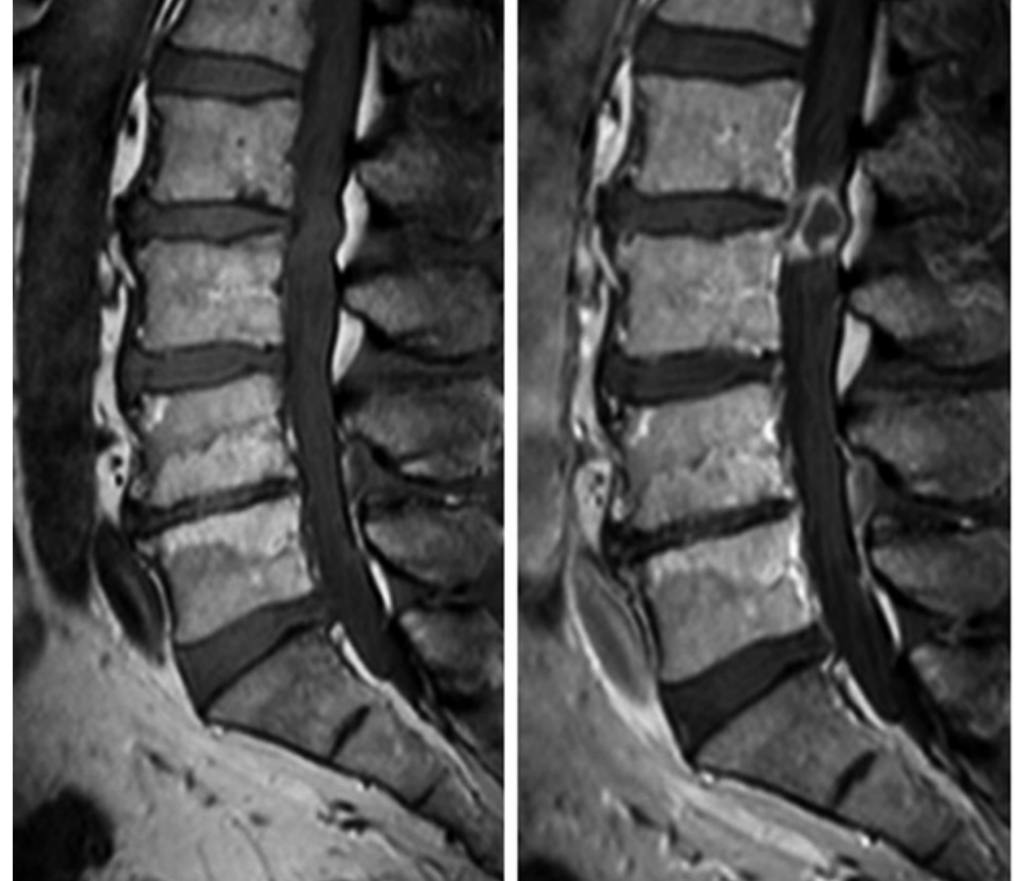
This week we have another even larger retrospective cohort study from South Korea. This time concerning the risk of lumbar surgery and opioid prescription in patients with LDH. It was published recently in Frontiers in Public Health (IF 4.1).
We have seen reduced rates of surgery associated with acupuncture previously on this blog. In 2019, it was neck surgery in patients with neck pain in South Korea (cohort size 50 171), see Can acupuncture prevent neck surgery? Next, in 2020, it was TKR in patients with OA knee in Taiwan (cohort size 8 623), see Reducing TKR surgery. Again in 2020, it was acromioplasty in patients with shoulder disorders in South Korea (cohort size 70 811), see Acromioplasty.
The current cohort study used the HIRA database, which uses the same data as the NHIS database but is managed by a separate organisation. From this database the team selected patients who had the ICD-10 diagnoses G55.1 and M51.1 during the year 2015.
- G55.1 – nerve root and plexus compressions in intervertebral disc disorders.
- M51.1 – lumbar and other intervertebral disc disorders with radiculopathy.
They started with 1.4 million cases, but this reduced to 788 505 when only new cases were included and patients with red flags and prior lumbar surgery were excluded. From this cohort, two separate cohorts were created for analysis of surgical outcomes and opioid prescription. The cohorts were defined by receiving either 3 or more KM visits or 3 or more CM visits in the first 60 days after entry. The opioid cohort was initially defined by being opioid naïve prior to entry.
Follow-up for outcomes was for 4 years after the index date, which was set at the 60-day point after entry. This means we have no problems with immortal time in this study, but inevitably plenty of others around the treatment selection criteria above.
Ultimately, from an initial 1.4 million patients with LDH in 2015, they ended with 2 surgical cohorts of 60 860 and 2 opioid cohorts of 36 342 after PSM. To be clear, the ‘surgical cohorts’ were thus named not because they had surgery but because they were being analysed for a surgical outcome. Likewise, the ‘opioid cohorts’ were thus named not because they took opioids but because they were opioid naïve and being analysed for an ultimate (from 60 days after diagnosis) opioid prescription outcome.
The rate of lumbar surgery was slightly less in the KM cohort (aHR 0.801), as was the rate of opioid prescription (aHR 0.891).
These are relatively modest differences between cohorts; however, both lumbar surgery and the use of opioids for chronic MSK pain are expensive and risky respectively.
More dramatic effects were observed in a prior study from Korea (yet another one that I managed to miss).[2] In this one the cohorts were over 100k each (n=130 089). They were taken from the NHIS NSC database from January 2002 to December 2013. Patients with a new diagnosis of LBP (M43, M47, M48, M51, M54, M99, and S33) were selected, so this is a much wider net than M51.1 alone. They were separated into KM and CM cohorts by virtue of having at least 2 acupuncture sessions within 6 weeks of the first record of LBP or no acupuncture sessions after diagnosis of LBP. The index date was set as the date of diagnosis in the CM cohort and the date of the first acupuncture session in the KM cohort. The latter partially caters for immortal time but not entirely, since the requirement was 2 sessions in 6 weeks.
PSM matching was performed based on age, sex, income, and CCI.
The outcome in this study was lumbar surgery within 2 years of the index date. This was significantly lower in the KM cohort (HR 0.633).
The problem with both of these studies and indeed all such big retrospective cohorts is the degree to which the selection criteria in the cohort with the intervention of interest (number of sessions required of acupuncture or KM within a certain timeframe) creates a selection bias that is not balanced adequately by the matching process (PSM).
It is not like an RCT, where the bigger the size of groups, the less likely it is for any imbalance between them (sometimes referred to as a randomisation failure in RCTs). Here, if there is an inherent selection bias, it will stay there independent of the size of the cohorts. So, even if you have over 100k patients in each group or cohort, if the design creates some form of confounding through selection that cannot be balanced (because it is unknown or unmeasured), it is hard to be sure that the association between selection criteria (acupuncture use or KM use) and outcomes (subsequent surgery or opioid prescription) reflects any potential causal relationship worth testing in a prospective trial.
References
1 Hyun J, Go H-Y, Ha I-H, et al. Korean medicine use is associated with reduced lumbar surgery and opioid prescriptions in lumbar disc herniation: a nationwide cohort study. Front Public Health. 2026;14:1792661. doi: 10.3389/fpubh.2026.1792661
2 Koh W, Kang K, Lee YJ, et al. Impact of acupuncture treatment on the lumbar surgery rate for low back pain in Korea: A nationwide matched retrospective cohort study. PloS One. 2018;13:e0199042. doi: 10.1371/journal.pone.0199042


You must be logged in to post a comment.