

Stimulated by Lang et al 2026.[1]
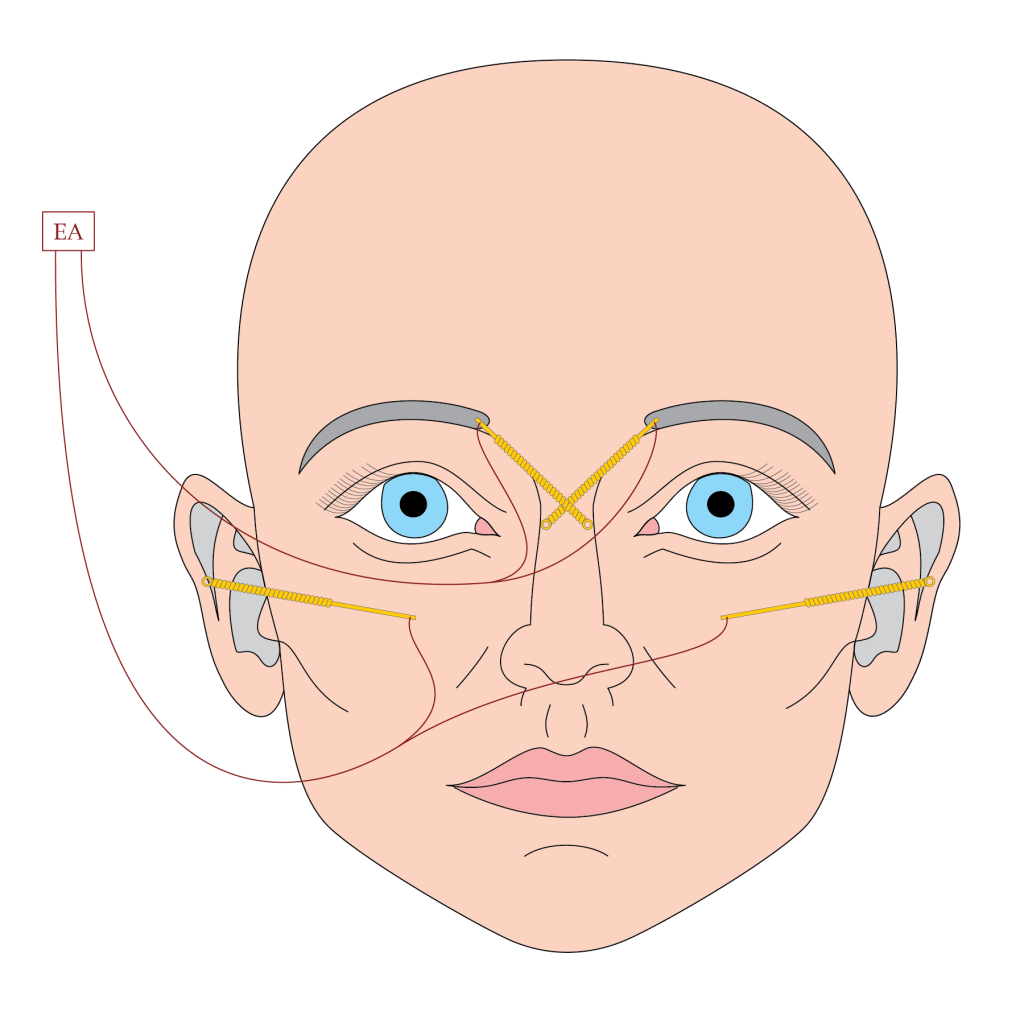
EA – electroacupuncture
DOCs – disorders of consciousness
pDOC – prolonged disorder of consciousness (DOC for over 28 days)
IF – impact factor
APC – author processing charge
EEG – electroencephalogram
MMN – mismatch negativity
CRS-R – coma recovery scale – revised
GCS – Glasgow coma scale
GOS – Glasgow outcome score
VS – vegetative state (also known as UWS)
UWS – unresponsive wakefulness syndrome
MCS – minimally-conscious state
MCS- – low-level behaviours (eg visual pursuit, localisation to pain)
MCS+ – higher-order behaviours (eg command following, object use)
eMCS – emerged from MCS
NMA – network meta-analysis
RCT – randomised controlled trial
rTMS – repetitive transcranial magnetic stimulation
tDCS – transcranial direct current stimulation
SUCRA – surface under the cumulative ranking curve
This is a small RCT (n=48) from Handan, Hebei, China published in the journal Arquivos De Neuro-Psiquiatria (IF 1.6). This is the official journal of the Brazilian Academy of Neurology (Academia Brasileira de Neurologia). It dates back to 1943 and is now open access with a very reasonable APC of $200. It is published by the German healthcare publisher Thieme.
This is a single centre study comparing EA across the midline at BL2 and ST2 with the needling alone and no electrical stimulation in patients with pDOC following cerebral haemorrhage (n=36), brain trauma (n=10), or cerebral infarction (n=2).
Treatment was applied for 30 minutes each day (5 days a week) for 3 weeks. The EA was applied at 2/100Hz and 1mA, which seems pretty mild, but we do not know the waveform parameters (the size of the bucket in the swimming pool analogy of EA, for those of you who have attended the BMAS EA course). By contrast the needling involved Huatuo needles of 0.35x40mm apparently. Judging by the image of the treatment protocol in the paper, the needles were not 40mm long, so perhaps they were finer than 0.35mm as well. The latter used in the face would be quite a significant stimulus.
The primary outcome was an objective EEG measurement called mismatch negativity (MMN). This is a particular form of auditory evoked (or event-related) potential where a consistent background (standard) tone (say 1000Hz) is interrupted intermittently by a different (deviant) tone (say 1200Hz). The difference between the standard and deviant tones on the EEG event-related potentials produces a difference (mismatch) following N1. By convention, N1 is the greatest negative wave occurring between 100ms and 300ms following the event. MMN is a subsequent negative wave that occurs roughly 100ms following N1.
MMN is thought to represent prefrontal attention processes in the brain but is not linked to active attention. It can be measured during sedation, anaesthesia, and coma.
The other outcomes were clinical scales – CRS-R, GCS, GOS. The awakening rate was determined by a change in the patient’s conscious level by at least 1 grade, where the grades were VS, MCS-, MCS+, and eMCS.
The GCS should be relatively familiar to all who have worked in an acute hospital. It was developed in the Glasgow neurosurgical unit in the 1970’s by Professor Bryan Jennett and his neurosurgical registrar Graham Teasdale to facilitate a rapid and reproducible bedside assessment of consciousness. It scores eye opening (1 to 4), verbal response (1 to 5) and motor response (1 to 6). It is scored from 3 to 15, where 3 is bad and 15 is fully alert. The median GCS in this study started at 10.
The CRS-R is more sophisticated scale that developed out of the GCS for evaluation of more subtle changes in consciousness in patients with pDOC. It has 3 more subscales than the GCS giving a total of 6 and a score range from 0 to 23 – auditory (0 to 4), visual (0 to 5), motor (0 to 6), oromotor/verbal (0 to 3), communication (0 to 2), arousal (0 to 3).
We have mentioned the GOS previously, see SAH headache 2019. It is a simple 5-point score from low disability (5) to death (1).
Both groups improved significantly in terms of amplitude and latency of MMN and there was no difference between them at the end of the treatment phase; however, the primary outcome was the MMN amplitude change and this was significantly greater in the EA group. Rather oddly, this primary outcome is not represented in any of the Tables or Figures in the paper.
The clinical outcomes also improved significantly and there were some significant differences between the group in favour of the EA group.
The awakening rate was 71% in the EA group and 54% in the control (sham EA or manual acupuncture). This was not a significant difference due to the small numbers; indeed, the difference was only 4 patients more in the EA group (17 vs 13).
There were some differences in the GOS, which was measured at 3 months following the end of the treatment phase. These differences suggested trends in favour of the EA group but again they were not statistically significant.
So, there is some suggestion of benefit in adding EA to the needles alone placed at BL2 and ST2, but the small group sizes means conclusions need to be cautious.
I found a recent NMA on non-pharmacological treatments for pDOC published this year in Frontiers in Neurology (IF 3.3).[2] It included 32 RCTs, but only 2 involved acupuncture, most trials were on rTMS and tDCS. rTMS came out on top of the SUCRA ranking. The 2 acupuncture trials included 100 patients each who were categorised as UWS. The change in CRS-R was of a similar size to that measured in this trial.
References
1 Lang X, Yang N, Li L, et al. Clinical efficacy of electroacupuncture stimulation based on mismatch negativity in patients with prolonged disorders of consciousness. Arq Neuropsiquiatr. 2026;84:1–11. doi: 10.1055/s-0046-1825520
2 Xu C, Yang H, Cai W, et al. Efficacy of non-pharmacological treatments for prolonged disorders of consciousness: a network meta-analysis of randomized controlled trials. Front Neurol. 2026;17:1754777. doi: 10.3389/fneur.2026.1754777


You must be logged in to post a comment.