

Stimulated by Song et al 2026.[1]
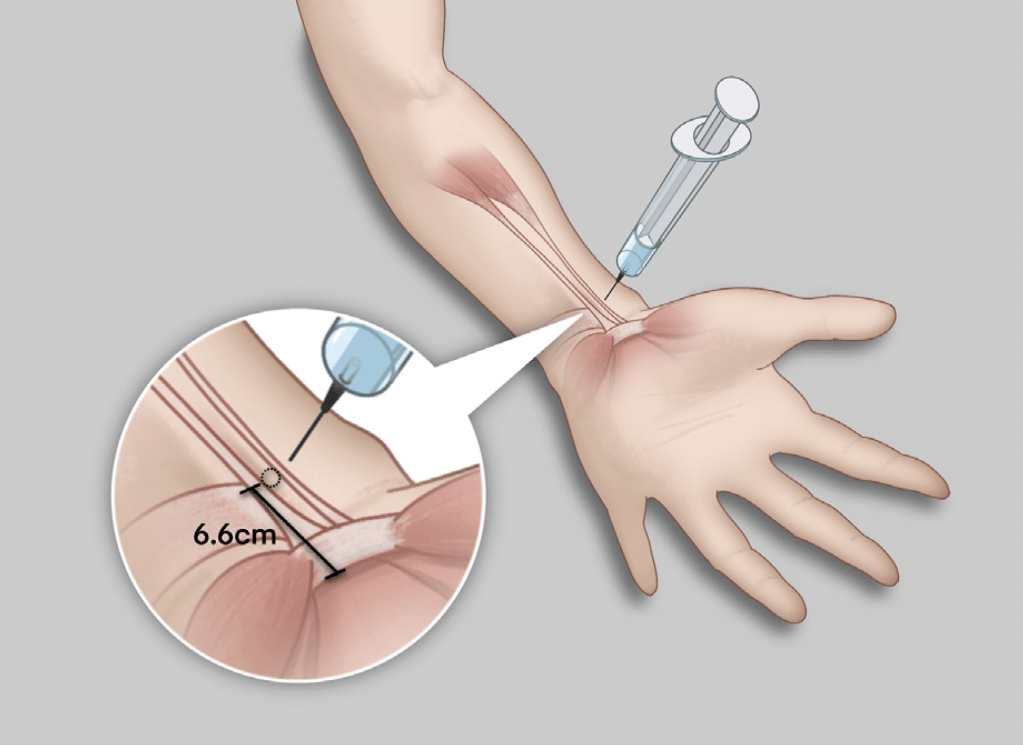
PC6 – the acupuncture point Pericardium 6
PONV – post-operative nausea and vomiting
GA – general anaesthesia
IV – intravenous
VAS – visual analogue score– key to acronyms
This single-centre, 4-arm trial (n=244) from Chengdu is just out in the journal Frontiers in Pharmacology (IF 5.4). I think this is the first time I have highlighted a study involving injection at an acupuncture point. I am inherently suspicious of such trials since points don’t really exist in strict physiological terms. Areas or volumes are probably closer to the truth than points.
The population was women undergoing elective gynaecological laparoscopic surgery under GA. This is a high-risk population for PONV. The anaesthesia was standardised and included 5mg of IV dexamethasone during induction. Granisetron 2mg (2ml) was given as an injection at PC6 or IV after skin closure and before extubation. The 2 remaining groups either received an injection of saline (2mls of 0.9%) at PC6 or no additional antiemetic drug or procedure.
The PC6 injections were performed with a 25G needle (0.50x25mm), which was inserted perpendicular to the skin to a depth of approximately 2cm, adjusted for subcutaneous tissue thickness. I am wincing slightly as I write this, since the median nerve is only about 1cm deep to this point. But the patients were still asleep, so they would not have felt any shooting or tingling, and we are told that there were no adverse events reported. The PC6 injections were performed over 10 to 15 seconds and the IV injection over 30 seconds.
The primary outcome was the incidence of moderate to severe nausea in the first 24 hours after surgery. This was determined by a score of 4 or more on a VAS of 0 to 10 were 0 was no nausea and 10 was the worst possible nausea. Other outcomes included earlier time points for the same measure, incidence of nausea, incidence of vomiting, VAS nausea, and use of rescue medication.
The percentage of patients with VAS nausea of 4 or more in the first 24 hours was 14.8 for PC6 granisetron, 29.5 for PC6 saline, 32.8 for IV granisetron, and 43.9 for the control. So, injecting granisetron at PC6 was significantly better than injecting it IV (p=0.02), and it was also better than control (p<0.01) unsurprisingly, but the benefit over PC6 saline did not quite reach significance (p=0.058).
Whilst n=244 seems like a reasonably large number, the 4 parallel arm design curtails the statistical power considerably, leaving uncertainty about some of the comparisons. I have already mentioned the difference between PC6 granisetron and PC6 saline, but there was also a lack of clear difference (in the primary outcome) between PC6 saline and control, and even between IV granisetron and control.
IV granisetron was better than control for vomiting (incidence in the first 24 hours), and the 5-HT3 antagonists are generally better at controlling vomiting than nausea it seems.
The research team did well in their choice of outcome for this trial, although I am not at all keen on their choice of intervention.
Ironically, another paper with a lead author called Song came out last week,[2] and that was an adverse event report concerning a 1.7cm needle fragment that had to be surgically removed from the cervical posterior midline at C4/5. The tip of the needle fragment was indenting the dura and clearly there was a concern regarding possible neural trauma or infection if it progressed much deeper. I will show you the imaging from this case report as an ironical counterpoint on the topic of potential neural trauma at the webinar on Wednesday.
References
1 Song J, Tang J, Gu J, et al. PC6 injection enhanced the preventive effect against postoperative nausea of granisetron compared with intravenous injection in gynecological laparoscopic patients: a randomized controlled study. Front Pharmacol. 2026;17:1840347. doi: 10.3389/fphar.2026.1840347
2 Song D, Cho D, Park W. Emergency Awake Removal of a Deep Cervical Spinal Canal Acupuncture Needle Under Local Anesthesia: A Case Report. Korean J Neurotrauma. 2026;22:493–501. doi: 10.13004/kjnt.2026.22.e41


You must be logged in to post a comment.